Alexandra Sutton
2025 Pegasus Scholarship Report
“Welcome in!”
One of my favourite things about arriving anywhere in the United States is the above greeting. In restaurants, in museums, in hotels and in bars, never have I been so earnestly welcomed, and the same is true of the six weeks I spent meeting fellow members of the legal profession in different American states, cities and towns. As my predecessors have said, it is difficult to encapsulate to the experience and value of the Pegasus program in a single report, but here follows my enthusiastic attempt.
California
To quote Justice Arthur G. Scotland, Sacramento Pegasus co-ordinator extraordinaire, my time in California was “go, go, go!” Having spent the first part of my career as a self-employed criminal barrister, the latter portion as a barrister within the Government Legal Department and having recently been appointed as a fee-paid tribunal judge, I was interested in a whole range of experiences whilst on the program, and Sacramento really delivered. I was keen to learn about the law-making process in California and gained a detailed view during meetings with lawyers from the Office of Legislative Counsel, with Governor Gavin Newsom’s Legal Affairs Secretary, with a City Council Representative, with experienced lobbyists and with people who had worked at the heart of Sacramento law and politics over several decades. I enjoyed discussing the nuances of giving legal advice in a political context, including consideration of our professional duties as counsel when working ‘in-house’. Having moved from self-employed to employed practice, this is something of which I am mindful, and so it was great to speak to members of a fused profession about how they balance those duties. One particularly interesting aspect of the Californian legislative system is the initiative process, wherein any citizen can propose a law or constitutional amendment without the support of the Governor or the legislature. This form of direct democracy felt very different from our own legislative process (other than the very occasional referendum, of course), and I had competing views as to its efficacy. It was productive to speak with legislative counsel about this process, and to discuss the journey of taking policy through to legislation as a non-partisan legal advisor – the beats of the day-to-day role felt very familiar. More generally, in all my meetings in California I was struck by the emphasis on and commitment to public service; having worked in both the criminal justice system and now in government, I found this very inspiring. Whilst I think it is part of the public sector survival instinct to have a degree of cynicism and gallows humour, I found myself softened by the earnestness and candour with which members of the legal community in the US speak about their work.
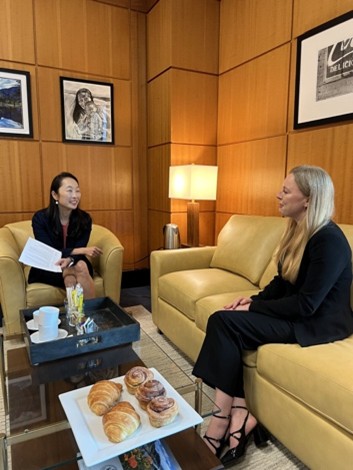 I was fortunate also to spend time with members of the Sacramento judiciary in different courts at federal and state level. I was immediately struck by the diversity of the bench in Sacramento and discussed the appointment process with Luis Cespedes, Governor Newsom’s Judicial Appointments Secretary. We talked about the benefit of having a bench representative of the communities served, and I shared my own experience of the application process along with the work done by the Judicial Appointments Commission to encourage wider participation in the profession in England and Wales. Whilst I think there has been progress on this front in the UK, my initial impression is that we are some way behind the US.
A highlight of my time in Sacramento was discussion with criminal practitioners and with judges in the criminal courts. I observed Judge Troy Nunley during a sentencing exercise and was interested by how much direct participation the defendant had in the hearing, from being stood next to her counsel rather than in the dock at the back of court, to addressing Judge Nunley directly in an elocution statement, which allowed her to personally express her remorse. For the most part such exchanges in the criminal courts in England and Wales are confined to submissions through counsel. I can see merit in both approaches (and certainly how the success of such a process could depend on the defendant) but in that case, I found the direct dialogue a respectful and constructive way to address both punishment and rehabilitation. In the Superior Court, I spoke with members of the judiciary about the skills required to run a busy court and the pressures on the criminal justice system, which I then witnessed first-hand. Not unlike a busy list court at home, there was a lot going on, and the nature of the crimes and the characters of the court felt very familiar. Less familiar was the sobering experience of witnessing the penalty phase of a capital murder trial, which was about as different as it gets for an English barrister, noting that capital punishment has long since been abolished in the UK. In my professional experience, I am well used to divorcing my own opinion from the factual matrix of a case or the position of a defendant, and I strongly believe in the duty to act without fear or favour within the relevant legal framework. Nonetheless, it was difficult to imagine dealing with such matters, and this was thrown into sharp relief later in the program when observing the latter appeal stages of a capital case in Florida.
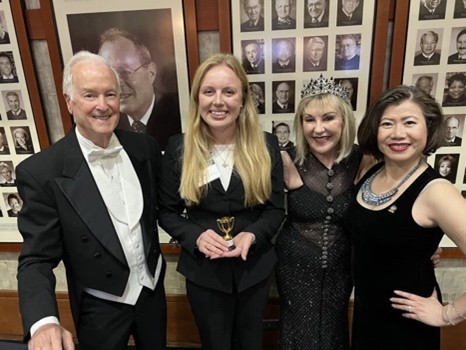 My final meeting in California was with California Supreme Court Justice Carol Corrigan, in San Francisco. In addition to being great fun, Justice Corrigan kindly shared her wisdom on the importance of logos, pathos, and ethos in advocacy. Away from the courts, I had a wonderful time enjoying the Golden State. I was made to feel like part of the family by my hosts Parker White and Carole McCook, who kindly took me to their (frankly cinematic) cabin in Lake Tahoe for the weekend, where we discussed law a little, and books, cinema, culture, and politics a lot. I was also honoured to be awarded a Hammy award from the Anthony M. Kennedy Inn of Court (best English barrister, in a competitive field of one), and to spend time driving down the stunning California coast on a John Steinbeck pilgrimage with Justice Scotland his wife, Sue. It was a special experience with special people.
Next was a hop from the Pacific to the Atlantic coast - watching the changing landscape from San Francisco to Orlando made clear the vast and varied nature of the US, and the same is true for its legal system. With no time to be wasted, I was collected from the airport by Judge Kelly McKibben and taken straight to a pontoon boat tour with my host Judge Nancy Maloney. Thus began a very fun week in Brevard County, Florida, hosted by the Vassar B. Carlton Inn of Court.
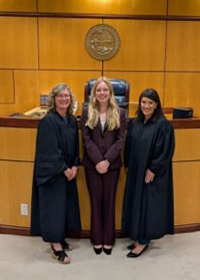 At the Moore Justice Center, I had the opportunity to watch several criminal hearings and was particularly interested to learn more about the plea-bargaining process. There is scope in the English legal system for cases to resolve by way of mixed or lesser pleas, but the process is not as formalised, and discretion as to sentence remains with the judge. In many of the cases I observed, the proposed term of custody to which the parties had agreed was put to the judge for her approval, and whilst the judge had the discretion to intervene, that appeared to be relatively uncommon. This meant that cases were capable of quick resolution, but it did raise questions on both sides of the house, such as whether the sentences agreed upon are too lenient, and whether the process places undue pressure on defendants to avoid a trial. It was interesting to explain the process of a sentencing exercise in England and Wales, including the concept of receiving credit for an early guilty plea, which was considered by some practitioners to whom I spoke to be another way to pressure a defendant to resolve a case. Another key area of discussion in the criminal setting was the fact that self-employed barristers routinely prosecute and defend in cases, rather than working exclusively for the state or as a public defender, for example. This seemed to come as a surprise to many I encountered across the US, but for me it is has been one of the most valuable parts of my career - I remain convinced that it is the best way to learn as a junior practitioner and that it lends itself to independence of thought when evaluating and presenting a case. The same applies to the concept of sitting as a part-time member of the judiciary, which was also seen as novel. It seems ordinary to me that lawyers can perform different roles fairly, robustly, and independently, and so it was interesting to gauge different reactions to that proposition. These candid conversations were some of my favourites of the trip—I felt very much at home chatting to criminal practitioners about the highs, lows, and pressures of the job, and I think that part of the value of the program is this ability to look at our own system through fresh eyes.
Whilst in Florida I was also able to visit the Fifth District Court of Appeal in Daytona Beach, meeting with several of the justices for lunch and observing oral argument, and I visited the District Court in Orlando. Whilst in Orlando, I took part in a wide-ranging Q&A about the English legal system with members of the George C. Young Inn, which felt part like giving a first-year constitutional and administrative law lecture, and part like being interviewed on a talk show (a surprisingly enjoyable combination). I also had the opportunity to spend time with the Brevard County Sheriff’s Office, which included a tour of the county jail. I was very interested to observe the first appearance court housed within the jail itself, which removed the need to transport defendants to the courthouse and allowed matters of bond to be resolved swiftly – this seemed like a very efficient system. Perhaps most excitingly, though, I was able to take a helicopter flight with the Brevard County Sheriff’s Office Aviation Unit: beautiful views and excellent exposure therapy for a nervous flyer.
In addition to time spent in court, I was treated to a whole range of Florida experiences, including an outing to the Kennedy Space Center, seeing not one, but two rocket launches from Cape Canaveral, a speedboat tour down the river at sunset, a trip to the zoo - I am grateful for the hospitality and friendship extended by all.
Washington DC, Virginia, Maryland, Pennsylvania
Autumn 2025 was a fascinating time to be in the US, and particularly in Washington DC. I arrived at the start of the government shutdown, which went on to be the longest in US history. It was interesting to see the impact of shutdown up close given that it is not something that happens in our parliamentary process, but the detrimental effect on government operations and consequently on US citizens was really striking.
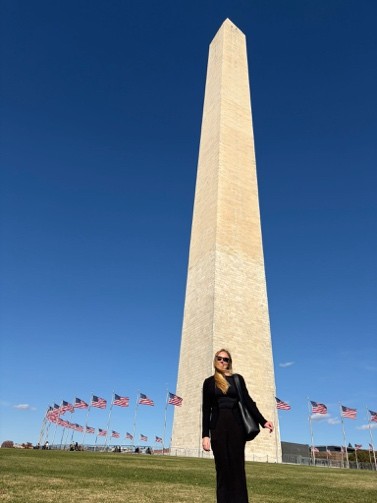 A key part of our time in the DMV involved observing oral argument in the appellate courts, including in the Maryland Supreme Court, the Court of Appeal for the District of Columbia, and the United States Supreme Court. The concept of appellate advocacy as a speciality was particularly notable, as it does not really function as a demarcated specialism for barristers in the English legal system in the same way. It was a great opportunity to observe the different skillsets required in trial advocacy as against appellate advocacy, and the differences between approaches to advocacy in the US and in the English legal system. In general terms, I found the style of advocacy to be more conversational in the US, which I anticipate is in part a product of the emphasis on written briefs (and which made me feel rather prim). The written briefs allow for more time to be spent on judicial questions and in my view this leads to some very robust and (mostly) constructive exchanges between bar and bench. The other key aspect of appellate advocacy in the US is the way submissions are time-limited, again leading to greater emphasis on written advocacy. It was an incredible experience to attend oral argument at the United States Supreme Court, and I was surprised by the level of engagement between the justices and the advocates (and on occasion between the justices themselves). A common thread of discussion throughout the program was regarding the differences in our respective Supreme Courts, and the interaction between jurisprudential philosophy and political ideology. Attending oral argument, it was clear to see the way in which the justices are cognisant of their relationship to the constitution by measure of their lines of questioning. The lack of parliamentary sovereignty gives the Supreme Court considerable power and wide-ranging impact—to my mind one consequence of this is that the public seem to be very engaged with the work of the court, and with the justices themselves (the latter aspect no doubt influenced by the appointment and confirmation process). When questioned by lawyers in the US on the personal profiles or politics of UK Supreme Court justices, I could not comment with any great level of detail, which is perhaps rather the point—my instinct is that there is a balance to be struck between the courts being open and engaged with the public, and the pseudo-celebrity which attaches to the US Supreme Court justices.
Away from the appellate courts and back to the criminal courts, we enjoyed a great day with Judge Andrea Hertzfeld watching a criminal trial and exchanging war stories over lunch with the judge and her clerks and court staff—another of my favourite experiences and a reminder that cut and thrust of court is very similar on both sides of the Atlantic. I was also very impressed with the quality of the technology in the court, including a white noise machine and headphones which allowed counsel to conduct legal argument in the presence, but not the hearing of the jury. This saved a lot of time, though I am not quite sure I can envision a headphone and wig situation working smoothly.
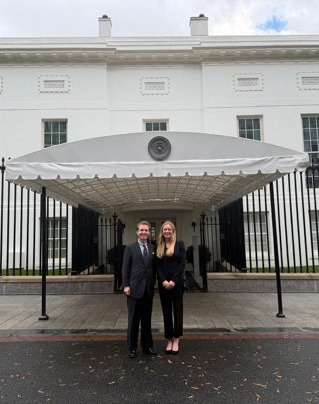 In addition to meeting members of the legal community, we also spoke with people who worked in adjacent fields, including a reporter who covers the DOJ beat, the Director of the Congressional Research Service, Fairfax County’s Deputy Chief of Police, and meetings with Maryland state delegates. These conversations were invaluable and helped facilitate a comprehensive view of the US legal system. We were fortunate to meet with several people at the centre of the US legal and political system at present, including meeting White House Counsel David Warrington in the West Wing, meeting the Assistant Attorney Generals in the Office of Legal Counsel and the Civil Rights Division, and meeting with the Solicitor General and with the Director of the FBI, each of whom was generous with their time, insight, and conversation. Meetings with students and law clerks at the start of their careers were also important, and I am particularly grateful to Kim Fullerton for inviting me to a student-led lecture at George Washington University which covered the impact of the recent escalation in Immigration and Customs Enforcement Agency activity—I was thoroughly impressed with the measured and thoughtful observations of the participants.
Our time in the DMV also included a visit to the Pentagon and a trip to Annapolis, and we were able to pop over to the Third District Court of Appeal in Philadelphia—I loved the court, the city, the museums and the history, though not the Philly cheesesteak (sacrilege, I know). One of my favourite days in DC was my last—I spent a brilliant morning at Howard University hosted by Professor Sha-Shana Crichton and her lovely colleagues, before meeting Edwin Kneedler, a former Solicitor General who argued 160 cases before the US Supreme Court (a record, I believe). Both experiences sum up the program at its best—the opportunity for rich and interesting discussion with new people.
Boston
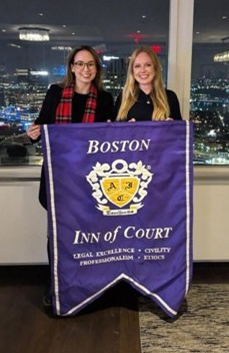 In Boston I was hosted by the Boston American Inn of Court, and my sincere thanks go to co-president Caroline Merck, who managed to show me the whole city in about four days and did it so well that I am already planning a return trip. I was able to see proceedings in the Massachusetts Supreme Court, cross-examination in an employment trial, and enjoyed a tour of the District Court for the State of Massachusetts, where I met Judge George O’Toole and his clerks. It was also great to meet Judge Heidi E. Brieger, Chief Justice of the Trial Court, and to talk about the practicalities of running the courts and the pressures on our respective justice systems. I later attended an Inn of Court meeting which took me straight back to my time as Junior of the Northern Circuit –the role of the local Inns has parallels with the Inns of Court, but in many ways feels similar to the role of the Circuits, which I enjoyed.
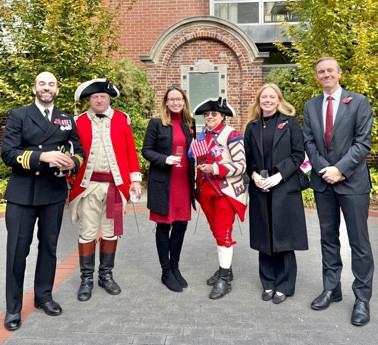 Perhaps the most surprising event during my time in Boston was a remembrance service at Old North End Church, the location from which Paul Revere famously signalled the arrival of British troops at the outset of the Revolutionary War (or War of Independence, depending on your side of the pond). The service was for soldiers of the Commonwealth, attended by representatives from the Canadian Armed Forces and the Royal Navy, and the British Consul-General in Boston, at which we were invited to sing God Save the King. Certainly not on my Boston bingo card, but an unforgettable experience. I also had the opportunity to explore Salem (famous for a rather retro sort of trial), to walk the historic Freedom Trail, to visit Harvard University, and to eat some superb food. The historic nature of the city felt very pertinent to my time in the US, particularly noting the imminent celebration of the 250th anniversary of American independence. Many of the differences in our legal systems feel fundamentally rooted in that history, from the origin of and emphasis on constitutional rights more broadly, to the practical implications: the concept of drawing an adverse inference from silence in criminal proceedings was mildly horrifying to many with whom I spoke, but for me it is an ordinary part of our system which I have never really interrogated.
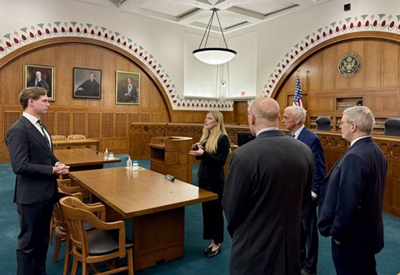 One of my most repeated phrases during the trip resulted from being asked whether the UK has a certain feature or quality in its society, culture, or legal system (ranging from Halloween to the bond system to political polarisation). The answer was almost always “yes, though perhaps not quite to the same extent.” For me, the Pegasus Scholarship was as much about learning about the American legal system as it was being invited to examine the system in which I live and work, and I can honestly say that this was an invaluable intellectual and personal experience which will stay with me.
A note of thanks
I could write a paragraph for each of the following, and there are far too many others to count, but in brief I would like to extend my sincere thanks to the Pegasus Scholarship Committee for their enthusiasm and hospitality, and particularly to the following: Cindy Dennis, Jesse Binnall and all at Binnall Law Group, Ellen and Tim DelSole, LTG Joseph Berger III, Eric Nitz, Professor Derek Webb, Roy T. Englert, Judge James Sweet, Professor Sha-Shana Crichton, Professor Kim Fullerton, Richard Schimel, Marot Williamson, Jason Steinhardt, Justice Arthur G. Scotland and Sue Scotland, Parker White and Carole McCook, Judge Laura Moody, Judge Kelly McKibben, Jeanine Allen, Judge Nancy Maloney, Caroline Merck, Kendall Nowocin, John Postl, the Anthony M. Kennedy, Vassar B. Carlton and Boston American Inns of Court, and finally, my co-scholar Caleb Kirton, for companionably stomping around DC with me—it was great fun.