Since 2021, I have had the pleasure of serving on the American Inns of Court Program Awards Committee, most recently as the 2025–2026 chair. In that time, I have seen hundreds of programs and am so impressed by the work being done by Inns across the country. In this article, I will highlight some of the qualities of a winning program. I hope it encourages other Inns to submit the amazing work they are doing.
Arguably the most important feature is a comprehensive and complete Program Submission Form that includes all required materials but that also brings the program to life for the committee. Videos are highly recommended as they truly convey the spirit of the program. A simple PDF file of the materials is just not enough to highlight the program’s intricacies and relevance.
In drafting your submission, it is important to understand the rubric against which your program is being evaluated. With each program review, committee members are asking themselves:
- Is the program relevant?
- Is it entertaining to watch and/or participate in?
- Is it creative or innovative?
- Is it educational?
- Does it involve all levels of a pupillage team?
- Is the program easily replicated?
Beyond simply being on or related to legal topics, a relevant program is specifically one which promotes or incorporates the mission of the American Inns of Court, which is “to inspire the legal community to advance the rule of law by achieving the highest level of professionalism through example, education, and mentoring.” Highlighting the ways in which your program models these aims is critical to a successful award application.
Unsurprisingly, entertaining programs are more likely to draw, engage, and retain an audience. It’s certainly more interesting to watch a legal-themed musical or a mock game show than just a lecture or panel discussion. As such, programs that are captivating, memorable, or just fun are highly rated. Beyond relying on written descriptions or summative reviews, including a video of the crowd during the program is an effective mechanism for demonstrating this component.
Creative and innovative programs present legal issues in unique ways. When evaluating on this criterion, we are often evaluating the method of education: Did someone simply stand up and lecture? Or did they engage the topic in a novel way and perhaps infuse comedy or pop culture?
Most intuitively, programs should be educational. An ideal program is interesting, thought-provoking, and challenging and lets all participants leave with at least one new piece of information. It also has supporting evidence and resources for more learning. Further, as a key component of the formal and informal mentorship missions of the Inns of Court, participants from each membership level should be involved in a program. This should be supported with evidence of broad reach within the program materials rather than simply by stating it in the submission form.
The final component regarding replication is important because a goal of the Program Awards is to maintain and grow a library of program resources for all Inns. While bigger and more extravagant productions are often highly entertaining and creative, they are often less easily replicated by another inn. For example, an impressively composed musical program may be impossible for another Inn to deploy themselves.
 I have seen many outstanding programs over my years on the committee, but I certainly have some distinct favorites. The first that comes to mind is Mardi Gras Unmasked: The Law and Lore of Fat Tuesday, produced by the American Inn of Court of Acadiana, in Lafayette, Louisiana.
Presented around the holiday, this program was written in a narrative format for two commentators as if they were watching a Mardi Gras parade. It explored the history of Mardi Gras and its many relevant (and regularly violated) laws, as well as case law that has stemmed from the festivities. It was fascinating!
 Another popular approach to programming is to use an interactive game show. A particularly timely program was The Music of Britney Spears: Before, During, and After the Conservatorship Battle, produced by the Leo A. Deegan Inn of Court, in Riverside, California.
The program focused first on conservatorships and the specific details of the Spears conservatorship case. It then transformed into a game show in which different Spears albums were used as categories for the game.
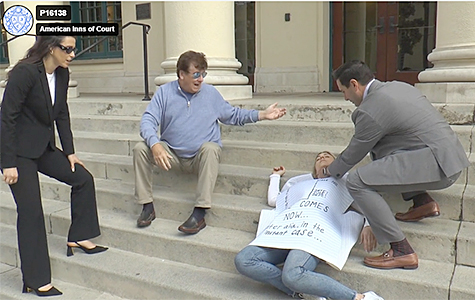 As a fan of the rare well-done legal TV drama, another favorite was the 2024 winning program from the Lewis M. Welsh American Inn of Court, in San Diego, California, titled Law in Order: Special Briefing Unit. According to the summary, “Inn members play[ed] the roles of investigators, prosecutors, suspects (lawyers with ineffective brief writing skills), and the victim of the ‘crime’ (a poorly written brief). The story follows the journey of the investigators (the Special Briefing Unit) as they discover the poorly written brief and investigate the ‘heinous crimes’ committed against it. First, the investigators have the nearly-dead brief examined by a ‘coroner.’ Next, the ‘prosecutors’ examine the evidence to determine the severity of the crimes committed. Finally, the investigators interrogate the ‘suspects,’ the attorneys who wrote the brief. Throughout the story, the program presents the pitfalls and errors often seen in legal writing and offers antidotes to those mistakes.”
This program was a clever and entertaining way to discuss a topic much more effectively than a simple lecture.
The final program I will highlight is the 2025 first place winner, CiviliTV and the Practice of Law: Lessons Inn Civility from Mister Rogers & Favorite Cartoon Characters, produced by the Garland R. Walker American Inn of Court, in Houston, Texas.
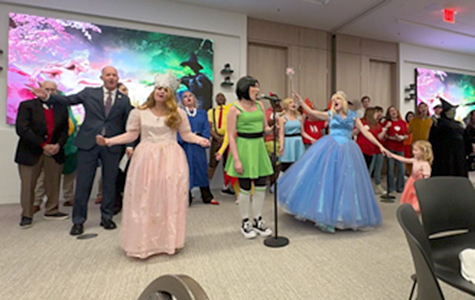 A throwback to childhood TV favorites, participants learned about the history of civility and the dos and don’ts of lawyer behavior through a faux Mister Rogers host and a trip on the Neighborhood Trolley through several cartoon towns, including Townsville (Powerpuff Girls), Springfield (The Simpsons), Coolsville (Scooby-Doo), and Bikini Bottom (SpongeBob SquarePants).
Program submissions are accepted on a rolling monthly basis. Award-winning Inns are recognized at an incredible black-tie event at the U.S. Supreme Court each summer.
Serving on the Program Awards Committee has been one of my favorite American Inns of Court experiences. If you are interested in serving or learning more about the committee, email Nicholas DiCicco.
 Jason F. Hicks, Esquire, is a deputy county attorney with Guilford County, in Greensboro, North Carolina. He is vice president of the Guilford American Inn of Court and chair of the American Inns of Court Program Awards Committee.